
Wolt and Uber Eats alternatives: ways to reduce platform dependence
Every Wolt order brings revenue, and every statement shows how much the platform keeps. Restaurants looking for a Wolt alternative often also consider what could replace Uber Eats. In both cases, the aim is to become more independent without losing the platforms' reach all at once.
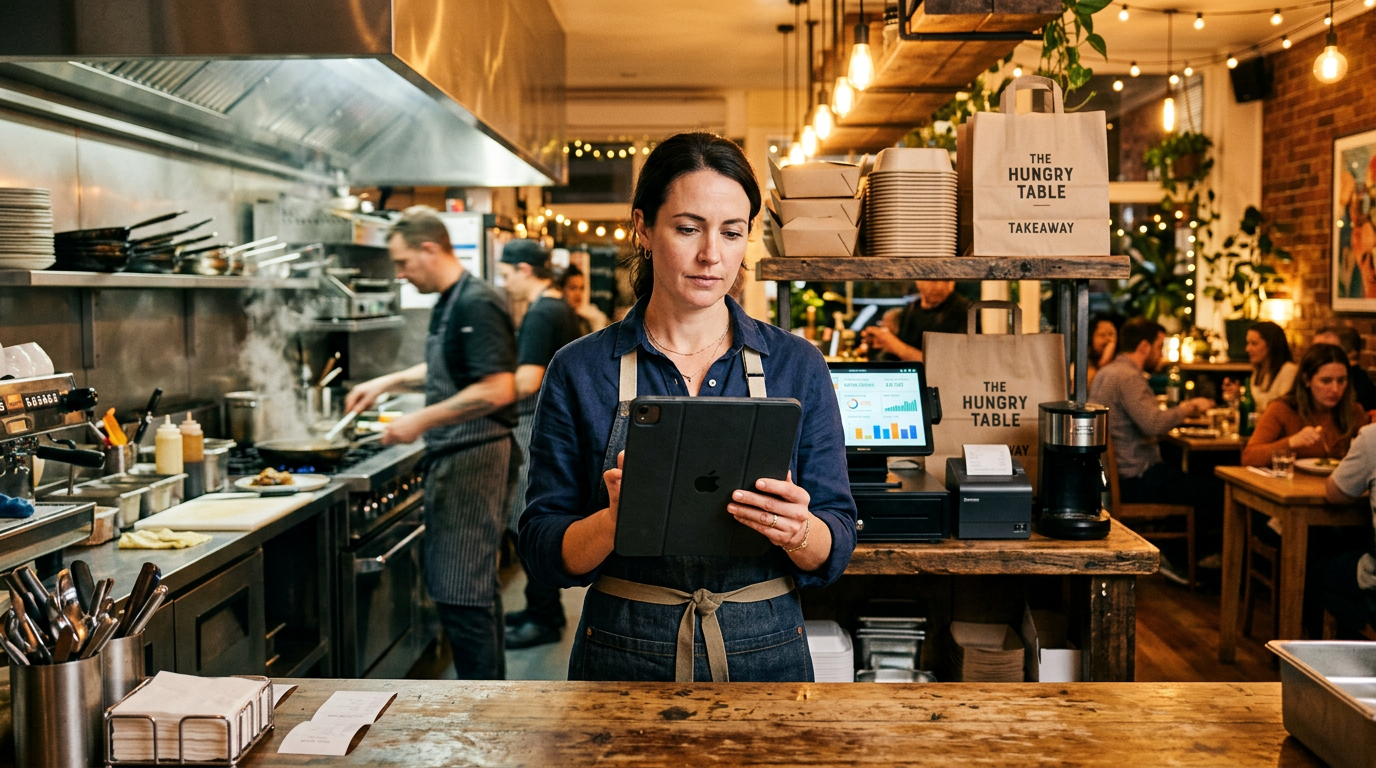
Instead of a ranking, this guide covers the options from another platform to your own ordering channel, grouped by order volume. If you would prefer to review your figures with us, book a demo.
Why restaurants look for a Wolt alternative (and consider Uber Eats too)
The search rarely concerns Wolt alone, because Uber Eats and Lieferando operate on the same principle. The platform attracts customers, controls contact with them and earns money on every order. Good Wolt alternatives therefore start with your own operations rather than simply swapping platforms.
Experience from customer discussions: similar to Lieferando (no official information)
Restaurant owners listed on Wolt or Uber Eats often describe the same pattern to us. Initially, the platform brings welcome additional orders. As volume grows, total commissions and additional service costs become more significant, while direct customer contact remains limited. Once platform visibility starts fluctuating too, the search for a second channel begins. This is an observation from experience, not an official figure. It also matches what many businesses know from Lieferando.
In our experience, some businesses eventually switch to their own drivers because platform delivery attracts higher commissions. According to its own pricing page, Uber Eats charges a higher rate for Uber courier delivery than for self-delivery and collection. Wolt does not publish a percentage and only refers to a commission on each platform order.
Commissions, visibility and customer relationships: how dependence develops

Three factors interact, reducing profit, predictability and direct access to your customers:
- Commissions: Every platform order costs a share of the order value. For dishes with a narrow contribution margin, this takes away a large part of the margin.
- Visibility in the portal: Rankings, promotions and paid placements affect your revenue, and the platform alone sets the rules.
- Limited customer relationships: Customers remember the app more readily than your restaurant. This makes it difficult to build loyalty or move repeat orders to a less expensive channel.
To become more independent, regain contact with customers through your own ordering channel and data.
Which businesses are affected? A guide by order volume
What matters is the proportion of your orders coming through platforms, because commissions rise with volume. The thresholds below are rough guidelines, not fixed limits. Where they fall for your business depends mainly on order value and margin.
- Fewer than around 10–15 orders per day: Platforms can work well as a reach channel at this level. A simple collection channel of your own is often still worthwhile because it lets you serve regular customers at a lower cost.
- Around 15–40 orders per day: A hybrid model becomes interesting. You need an ordering system and a reliable POS connection; otherwise, running parallel channels ties up too many staff.
- More than 40 orders per day: A strong direct channel with a white-label partner or your own fleet often pays off because platform costs otherwise grow with every additional order.
We can work through where your business sits on this scale during a demo.
Available options: advantages and disadvantages
A Wolt alternative rarely consists of a single provider. It usually combines platforms for reach, regional delivery services and your own ordering channel at the centre. The important thing is to avoid a sudden drop in revenue during the transition.
Another major platform: what switching achieves and what it does not
The first thought is often to switch from Wolt to Uber Eats or vice versa. That can help in the short term if one platform has more demand in your area. But the underlying problem remains: you still pay commissions and give up direct customer contact. Using platforms selectively makes more sense:
- Set an internal limit on the share of revenue from each platform.
- Use platforms primarily to attract new customers.
- Build your direct channel alongside them so regular customers do not keep ordering through the platform.
If your question is more about “Wolt or Lieferando?”, our guide to six options explains which Lieferando alternative suits your restaurant.
Regional platforms and networks: what to look for
Regional platforms and delivery services can be a real alternative if they have a strong presence in your delivery area and support responds faster than major platforms. Above all, check whether the partnership works in daily operations:
- Does the provider cover your entire service area?
- How quickly do they respond when drivers are unavailable or deliveries are delayed?
- How transparent are billing and responsibilities?
- What does the contract say about data access?
Regional providers rarely replace the reach of major platforms, but often work well as a flexible additional option.
White-label delivery: brand, fees and customer data
A white-label delivery service delivers on your behalf. Customers order through your website or app and see your brand, while a logistics partner handles delivery. This lets you build direct orders without immediately needing your own fleet.
Uber Direct is one example. According to the German Uber Eats pricing page, it costs from €7.90 per delivery with no commission. Prices can be higher or lower depending on distance, delivery speed and region. You must arrange, technically assess and budget for this external delivery service separately. Clarify beforehand who receives which customer data, who is liable for damage or delays, and what happens during disruptions.
Your own ordering channel: website, collection and app
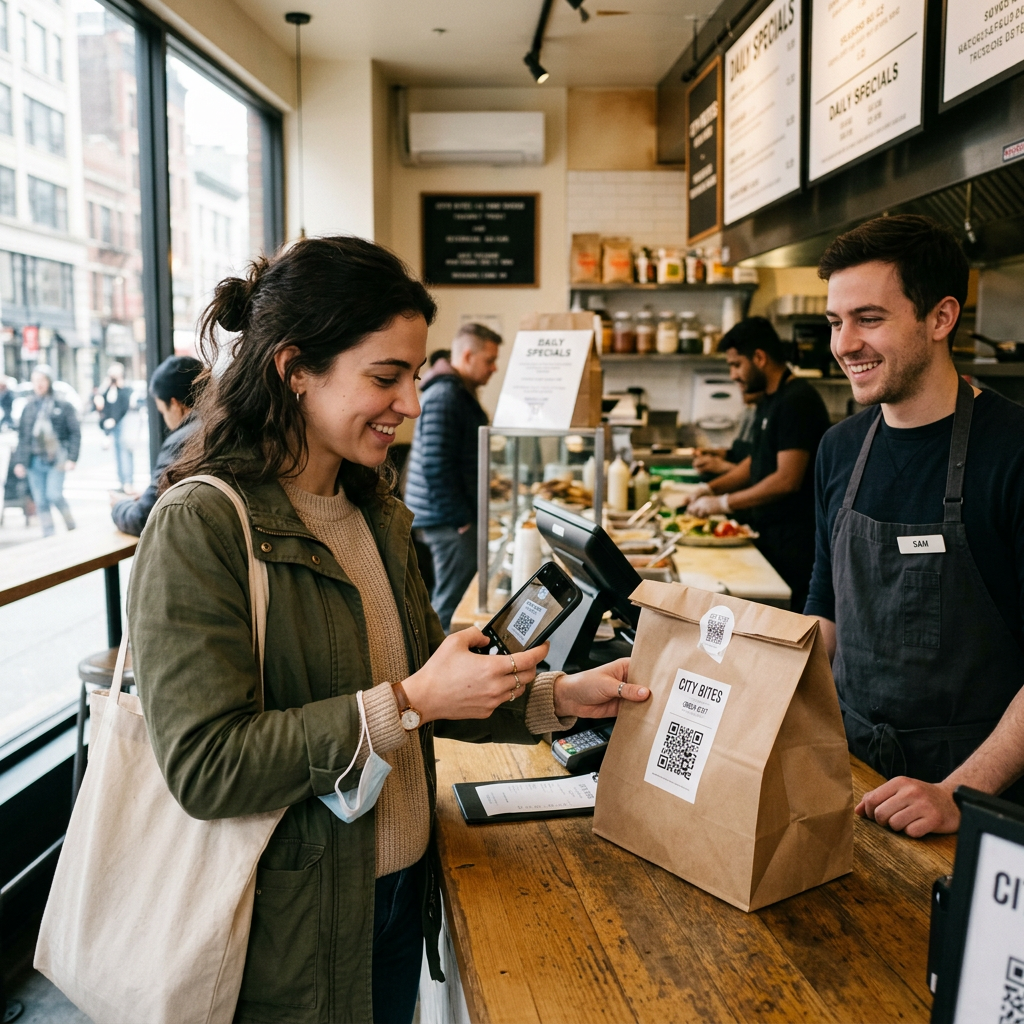
Greater independence mainly comes from your own ordering channel: an ordering website with Click & Collect and, where suitable, your own delivery service. Common ordering systems can be integrated into an existing restaurant website. For many restaurant owners, getting started is therefore easier than expected:
- Start with collection. It involves no platform commission and requires no drivers.
- Add delivery later using your own drivers or a white-label partner.
- Draw platform customers' attention to your shop, for example with QR codes on flyers or packaging.
GastroSprint is built for exactly this step:
- Commission: 0% GastroSprint order commission; Mollie payment fees are charged separately.
- Getting started: The Direkt plan starts at €64 net per month with a one-month contract term.
- An app for your regular customers: iPhone and Android app from the Growth plan at €119 net per month.
To help Wolt customers find your shop, every plan includes 1,000 free personalised voucher cards with a QR code at launch. For differences in costs and ordering journeys between your own shop and platforms, see our comparison with Wolt and our comparison with Uber Eats.
We can discuss whether collection, delivery or both suit your business during a demo.
Practical steps when switching or parallel operation
Whether you switch or run channels in parallel, clear procedures and suitable technology keep platform, website and telephone orders organised.
POS integration and order reconciliation: checklist
Without POS integration, every additional channel creates a potential source of errors. Ideally, orders from all channels arrive in one system, such as your POS. The following checklist is a general selection guide. It describes possible requirements for your overall setup, not GastroSprint's guaranteed feature set. Check these points before starting:
- Platform and direct orders appear in a shared overview.
- Orders are automatically sent to the POS or kitchen printer.
- Cancellations and changes are recorded correctly.
- Time slots and capacity can be managed.
- Menu items and prices are maintained in one place.
With GastroSprint, the ordering website accepts orders from your own channel and complements your existing POS. Platform orders still arrive through Wolt, Uber Eats or Lieferando, or through your POS's own platform integration if it supports one.
Driver arrangements (employees versus freelancers): costs, liability and service
Your driver model determines costs, liability and service quality, as well as how reliably your delivery operation handles peak demand or staff sickness.
- Employed drivers: more control and predictability, but fixed costs and staffing responsibilities.
- Freelancers or external partners: more flexible during busy periods. If freelance drivers effectively work as employees, they may be misclassified, potentially leading to back payments of social insurance contributions. If in doubt, the German Pension Insurance status determination procedure can clarify their employment status.
- Mixed model: a permanent core team with a partner covering peaks.
Alongside costs per delivery, account for complaints, disruptions and the impact on your reviews.
Customer data and privacy: what to consider
Without proper consent, your ability to use customer data for advertising is limited, and without customer data it is difficult to move regular customers away from platforms. Addresses and telephone numbers from Wolt or Uber Eats orders are not automatically available for newsletters or other advertising. Your own channel needs:
- A clear privacy notice for your website, ordering shop and app
- Documented consent for newsletters, SMS and push notifications
- Clear roles and access permissions for the team
- Established procedures for access and deletion requests
Decision guide: which Wolt alternative suits your business?
Instead of looking for the best platform, assess your own business first. Order volume indicates when commissions start affecting profit more than the additional reach.
Small businesses: quickly relieve the burden with Click & Collect and a lean ordering channel
For smaller businesses, a simple ordering channel of their own is usually the quickest step, while Wolt continues to attract new customers alongside it.
- Your own ordering website for regular customers, initially for collection only
- Promote the shop at the counter, on the menu and in every bag
- Add your shop's ordering link to your Google Business Profile
This reduces commission costs without requiring you to organise drivers.
Medium-sized businesses: platform and direct channel in parallel, with a reliable POS connection
Medium-sized businesses often benefit from a hybrid model where one or two platforms provide reach while the direct channel grows.
- Your own shop with collection and delivery for returning customers
- Make POS integration a clear priority
- Consistent order management across all channels
This gradually shifts your revenue towards direct orders.
Larger operations: Scaling via white label delivery service or own fleet
In larger businesses, “we also deliver” develops into a dedicated delivery operation with reporting, shift planning and consistent standards.
- Your own ordering website and app as the default channel
- A white-label partner or your own fleet, depending on location and staffing conditions
- Metrics and consistent procedures across all locations
Platforms then remain an addition that your business no longer depends on.
Conclusion
A Wolt or Uber Eats alternative is rarely just a change of provider. It becomes worthwhile as a strategy: use platforms selectively for reach, build your own ordering channel alongside them, handle customer data according to the GDPR and maintain stable operations with a reliable POS connection.
Every order that moves from a platform to your own shop leaves you with more margin.
FAQ
How quickly does a separate ordering channel pay off compared to platforms?
That depends on your order volume and platform share. Your own shop often pays off once some regular customers and business clients order directly. Compare the saved platform commission against the fixed monthly fee and payment charges.
How much does GastroSprint cost exactly?
An ordering website alongside Wolt and Uber Eats starts at €64 net per month on the Direkt plan. The contract term is one month, with no setup fee. For an additional iPhone and Android app, choose Growth at €119 net per month with a three-month term. GastroSprint charges 0% order commission. Online payment costs depend on your Mollie merchant account.
Can I run an ordering system parallel to Wolt and Uber Eats?
Yes, this is a realistic approach for many restaurants. You decide which channels remain active. Because platform and website orders arrive separately, you need clear order management.
Which POS integration do I need so that orders run smoothly in sync?
You need a connection that automatically sends online orders to your POS, keeps prices consistent and records cancellations correctly.
GastroSprint integrates with the WinOrder POS system. Further POS integrations are planned. Just ask us about your POS — we will discuss which connection is possible for your business.
Who owns customer data and what do I have to consider when it comes to data protection?
For platform orders, customer data mainly remains with the platform. For direct orders through your own channel, you may use it if you provide transparent information and generally obtain consent for advertising. Your restaurant is responsible for lawful processing.
If you want to build your own channel alongside Wolt and Uber Eats, book a demo or look at the pricing overview. In the demo, we show you how orders arrive in your shop while the platforms continue running alongside it.
Sources and product basis
- Wolt for restaurantsOfficial classification of the Wolt marketplace, order management and commission model.Retrieved on
- Uber DirectOfficial classification of external delivery for orders via own channels; no statement about a GastroSprint connection.Retrieved on
- GastroSprint pricesplan overview for direct and growth; Basis of the monthly prices mentioned in the article.Retrieved on
- Uber Eats Germany: pricingOfficial German pricing overview for Uber Eats and external delivery through Uber Direct.Retrieved on