Opening a ghost kitchen: concept, costs and the right ordering system
A ghost kitchen, often called a dark kitchen, is a production kitchen without a dining room that prepares food solely for delivery and collection. Without passing trade, the ordering channel is the entire business. It determines your margin, your operations and whether the model can grow.
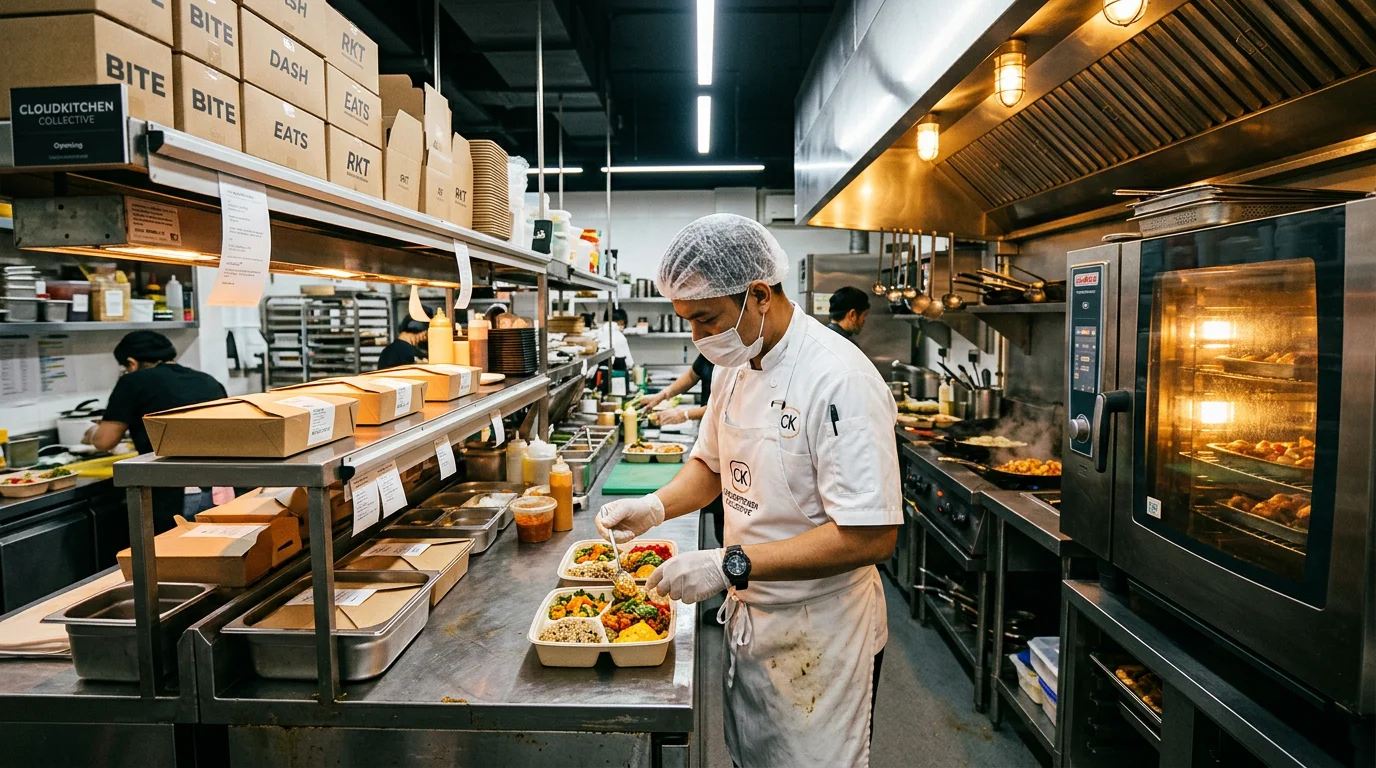
Opening a ghost kitchen essentially means setting up a restaurant where no guest sits at a table. The concept, financial planning and technology support the entire business, because there is no on-site service to compensate for weaknesses in the ordering process. Having your own ordering channel from the outset reduces your dependence on delivery platforms.
What is a ghost kitchen? Definition, operating models and risks
A ghost kitchen prepares food professionally, while customers eat at home or in the office. The model reflects a change in ordering habits. Ordering food online is part of everyday life for many consumers, and restaurant owners are looking for ways to reduce fixed costs. A ghost kitchen is not an automatic success, though. It only becomes viable when the economics of each order work.
Ghost kitchen and dark kitchen: terminology and the role of location
In everyday use, ghost kitchen and dark kitchen mean practically the same thing; virtual kitchen is another term you may encounter. The latter sometimes refers more specifically to an online-only brand operating from an existing restaurant kitchen. The label is secondary to your planning. A clear ghost kitchen concept, legally compliant operations and a viable ordering channel matter more.
The intensity of competition depends primarily on the ghost kitchen's location. Berlin and other metropolitan areas represent one extreme. Numerous dark kitchens and restaurants compete for the same neighbourhoods across several platforms, and guests expect short delivery times.
Smaller towns and holiday destinations place different demands on a ghost kitchen. Lüdenscheid and similar mid-sized towns attract fewer incidental customers through platforms, making regular guests and a direct channel more important. On Sylt and in other holiday regions, demand follows the seasons, with busy summer weeks and a much quieter winter. Financial planning there needs to withstand slower months.
Comparing operating models: your own production kitchen, subletting and multi-brand kitchens
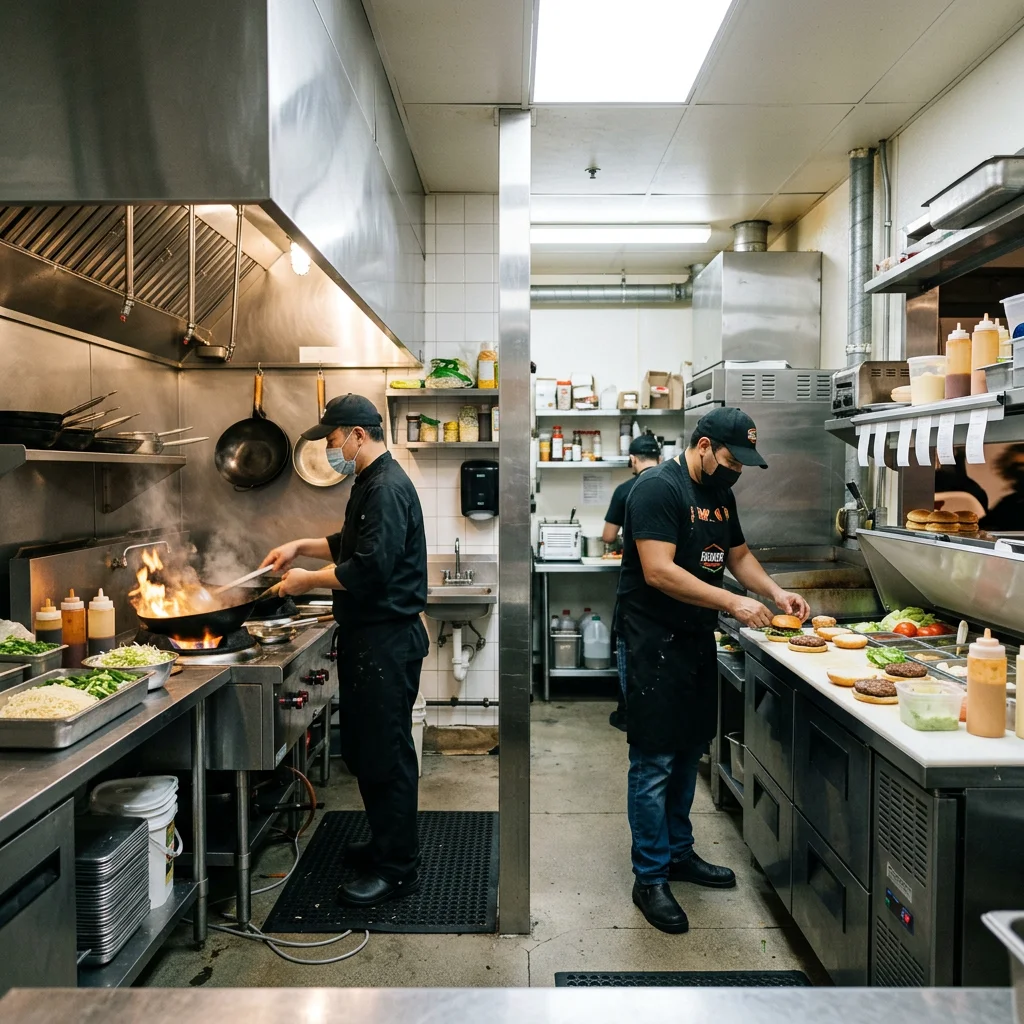
Three main operating models are available both to ghost kitchen start-ups and to restaurants adding a delivery kitchen. The best fit depends on fixed costs, control and workload.
- Your own production kitchen: You rent or build a kitchen solely for delivery and collection, controlling the layout, processes and hygiene yourself. In return, you bear high fixed costs for rent, equipment and energy, along with the greatest start-up risk.
- Subletting an existing kitchen: You use spare capacity in another business's restaurant kitchen, for example at lunchtime when it only cooks in the evening. This reduces start-up costs. Clear agreements, preferably in writing, are essential for storage space, cleaning, hours of use and responsibility for hygiene.
- Multi-brand kitchen: Several brands with their own menus operate from one kitchen. This improves utilisation and makes it easier to test new dishes. However, each brand adds menus, packaging and channels, and without central coordination you can quickly lose track.
Advantages, disadvantages and risks of a kitchen without a dining room
Advantages include less floor space, fewer service staff and standardised processes. Dark kitchens design their operations specifically for delivery and test new dishes or brands faster than a traditional restaurant.
The biggest disadvantage follows directly from the model. Without a dining room, there is no passing trade, so you need to build visibility primarily online. A lack of transparency can also be a problem: with platforms, external drivers and multiple tablets, quality and timing are difficult to control throughout.
If food arrives late, cold or incorrect, the guest holds your kitchen responsible, even if the driver caused the problem. Relying entirely on delivery platforms is particularly risky. Their commissions, rankings and promotions then determine your margin.
Opening a ghost kitchen: costs, permits and ordering system
A ghost kitchen can often open faster than a traditional restaurant. You still need sound hygiene procedures, clear processes and financial planning for each order. Because platform fees directly affect the results of businesses without dining rooms, the ordering channel belongs in your planning from the start.
Costs and permits: from equipment to food hygiene (HACCP)
Typical start-up cost categories:
- Rent and utilities: location, energy and any conversion work
- Kitchen equipment: refrigeration, combi oven, cooker, dishwashing equipment and shelving
- Packaging and storage: recurring and often underestimated
- Staff: kitchen team, plus drivers if you handle delivery yourself
- Permits and requirements: dealings with authorities, building regulations and documentation
- IT and ordering system: fixed, predictable monthly costs
In Germany, the formal process starts with registering your business. At the same time, register the operation with the local food safety authority, which is often part of the veterinary office. A delivery and collection kitchen without on-site consumption generally does not require a restaurant licence. However, the actual notification and permit requirements depend on the federal state, the specific use of the premises and your business concept. Clarify this with the local trade office before renting. If a warehouse or retail unit is used as a kitchen for the first time, planning approval for a change of use may be required, including ventilation and fire safety conditions.
You need business-specific checks based on HACCP principles, appropriate hygiene training and documentation proportionate to the nature and size of your operation. Anyone starting an activity covered by Section 42(1) of Germany's Infection Protection Act (IfSG) for the first time needs a certificate confirming the initial instruction under section 43 of the Infection Protection Act. When starting that activity for the first time, the certificate must be no more than three months old; this period does not restart every time the employer changes. The employer must provide and document follow-up instruction after the employee starts work and every two years thereafter. The certificate and record of the latest follow-up instruction must be available at the premises. Food safety inspections are usually unannounced and tend to run more smoothly when your documentation is well maintained.
For online sales, the Food Information Regulation also requires allergen information for non-prepacked food to be available before the order is completed. Your local trade office, building authority and food safety authority can provide binding information for your location.
The ranges in the following overview are rough examples and vary considerably depending on location and the condition of the premises.
| Cost category | Approximate range | Note |
|---|---|---|
| Conversion and installations (ventilation, connections) | €5,000–40,000 one-off | depending on the initial condition and fire safety requirements |
| Kitchen equipment (new or used) | €10,000–60,000 one-off | used equipment costs less but requires more maintenance |
| Rent and utilities | €1,000–6,000 per month | depending on location, size and energy prices |
| Packaging | €0.60–2.50 per order | fully included in the cost per order |
| IT and ordering system | from €64 net per month | Price of GastroSprint Direkt, plus payment fees |
Ordering channels and technology: your own shop, delivery apps or both
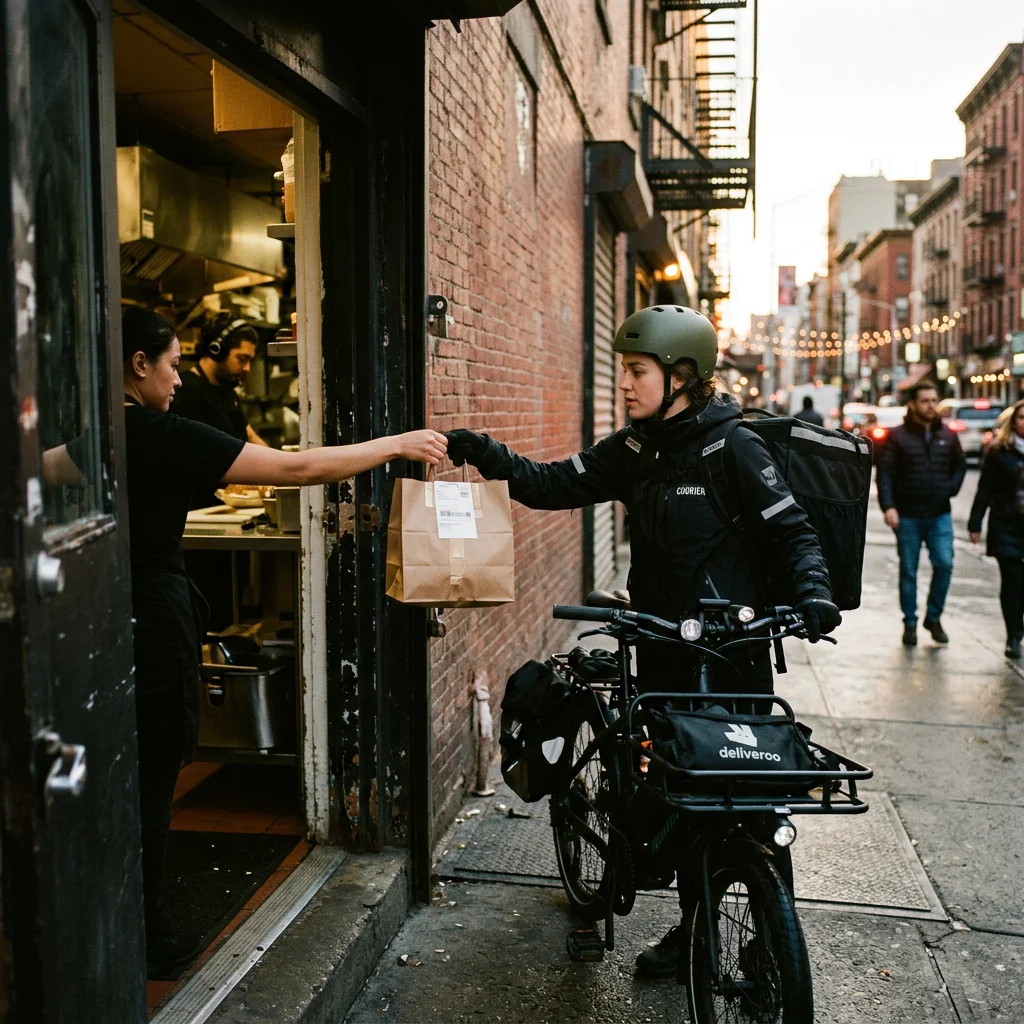
Without a dining room, the ordering channel is your only entrance. A platform introduces you to new guests and charges a commission on each order in return. The amount depends on the platform and on who handles delivery.
Treat platform profiles as a supplement and build your own ordering channels from the start. These include your website, QR codes on flyers and packaging, social media and the ordering link in your Google Business Profile. Ideally, all these routes lead to one ordering shop where orders are collected.
Two decisions belong at the start:
- Define your delivery area before you grow: A small radius that your drivers can cover quickly is safer at the beginning. Expand the area only once your delivery times are consistently reliable. Find the approach in the delivery area guide.
- Budget realistically for system costs: Fixed monthly costs need to be calculated differently from commissions that grow with every order. The article on Online ordering system costs explains what to include, from the monthly subscription to payment costs.
This type of direct ordering channel is what the GastroSprint ordering system is designed for. The Direkt plan, an ordering shop without your own app, starts at €64 per month excluding VAT. You can cancel monthly, and GastroSprint charges 0% order commission. Online payments incur additional Mollie fees under your own agreement with the payment provider. If you do not yet have a digital menu, the AI menu import processes a photo or PDF of your menu. You check the result and approve it yourself.
Because the shop is not a marketplace, it does not have a platform's passing trade. Visibility comes from your own channels and marketing, and delivery is also your responsibility. Platform orders continue to arrive separately through Lieferando, Wolt or Uber Eats.
Operational success factors: menu engineering, last-mile logistics and per-order calculations
- Menu engineering: This means deliberately planning your menu around popularity and contribution margin. For ghost kitchens, short preparation times, dishes that travel well and few sources of error are key. Start with a small menu and calculate the food, packaging and labour costs of each dish.
- Last-mile logistics: For the last mile to the customer's door, choose your own drivers, a platform's delivery fleet or a combination. Define time slots, order cut-off times and realistic delivery zones, because the journey also determines what arrives at the guest's door.
A calculation for a single order shows how strongly the ordering channel affects the result. Specialists call this unit economics: in this case, revenue and costs per order. In the example, the kitchen handles delivery itself in both cases. The platform fee used is the 14% that Uber Eats charges for self-delivery.
| Item | Order through a delivery platform | Order in your own shop |
|---|---|---|
| Basket value (including VAT) | 25,00 € | 25,00 € |
| VAT (7% on food) | −1,64 € | −1,64 € |
| Food costs | −8,00 € | −8,00 € |
| Packaging | −1,50 € | −1,50 € |
| Kitchen labour allocation | −4,00 € | −4,00 € |
| Commission (14% for self-delivery) | −3,50 € | 0,00 € |
| Contribution margin before delivery and fixed costs | 6,36 € | 9,86 € |
Your own shop leaves €3.50 more per order, or €3,500 per month at 1,000 orders, for rent, system costs and marketing, less payment fees. If Uber Eats handles delivery, the same order incurs €7.50 commission (30%), but your own driver costs no longer apply. For delivery-only businesses, the ordering channel therefore often determines whether growth generates profit or simply increases losses.
If you want to avoid investing in your own kitchen, consider Kitchen-as-a-Service (KaaS), which means renting a fully equipped kitchen. The recurring fees then need to be included in full in your calculations.
FAQ
How does a ghost kitchen differ from a normal restaurant?
A ghost kitchen, also called a dark kitchen, has no dining room and relies entirely on delivery and collection. Compared with full-service restaurants, it eliminates waiting staff and dining room costs, while shifting the focus to technology, logistics and digital ordering.
Which permits and hygiene requirements (HACCP) apply to a ghost kitchen?
In Germany, these generally include business registration, registration with the food safety authority, instruction under the Infection Protection Act and a documented HACCP concept. Depending on the premises, planning approval for a change of use may also be necessary. Clarify the requirements for your location with the authorities before signing the lease.
What are the typical cost categories?
One-off costs mainly cover conversion work, installations and kitchen equipment. Recurring costs include rent, energy, staff, packaging and the ordering system. Marketing is often underestimated: without passing trade, you build visibility yourself, for example with flyers in your delivery area and your Google Business Profile.
Why does a ghost kitchen need its own ordering channel alongside a platform profile?
With a platform as your only channel, you depend on its commissions, ranking and rules, and learn little about your guests. A stable margin requires your own channels in the medium term, where regular guests order directly without platform commission.
How does GastroSprint support the launch of a ghost kitchen?
Your guests order directly from you through your own shop, for delivery or collection. The Direkt plan starts at €64 per month excluding VAT, and GastroSprint charges no percentage fee on direct orders. The AI import creates a draft from a photo or PDF of your menu, which you review before publication. Your business remains responsible for visibility and delivery.
Conclusion: what to settle before opening
Before renting premises for a ghost kitchen or dark kitchen, establish your concept and menu, delivery area, hygiene procedures and, above all, ordering channel. These determine whether a good kitchen idea becomes a restaurant concept that remains viable as order volumes grow.
One free demo with GastroSprint gives you an idea of what your commission-free ordering shop for a delivery kitchen could look like. It also helps you clarify which plan suits your start.
Sources and product basis
- German Infection Protection Act, Section 43Initial instruction, first commencement of the activity and documented follow-up instruction.Retrieved on
- Regulation (EC) No 852/2004Food hygiene, business-specific checks and proportionate documentation.Retrieved on
- Uber Eats pricingPublished fees for self-delivery and delivery through Uber Eats.Retrieved on
- GastroSprint pricesPrices for your own ordering shop and information on order commission.Retrieved on