
Start a Food Delivery Service: Permits, Costs and Software Step by Step
Starting a food delivery service means planning your menu, costs, permits, hygiene and delivery area together. This guide walks you through launching in Germany and explains how your own digital ordering channel fits in.
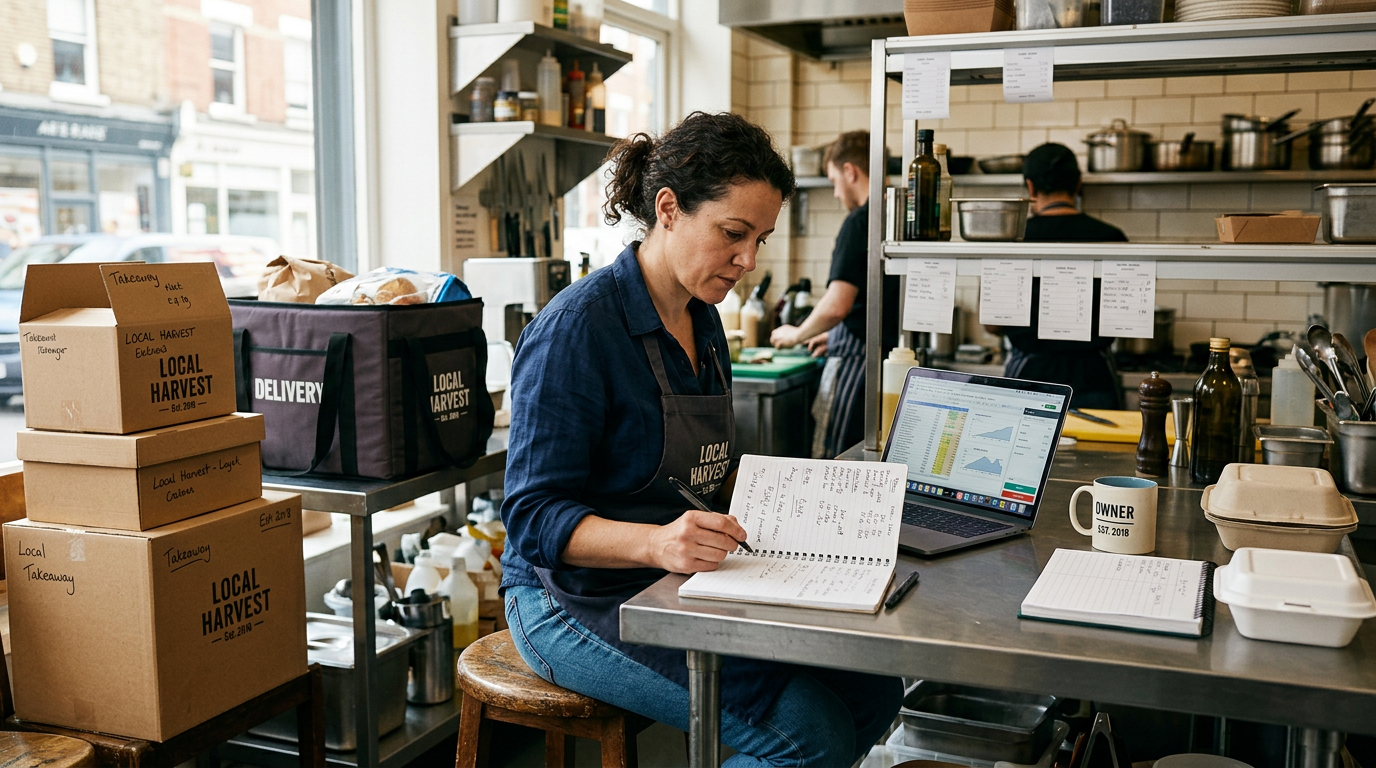
Start with your menu, business model and a clear cost calculation
A delivery business rarely fails because of taste; more often, its calculations fail to properly account for packaging, driver time and fees.
Start with the delivery menu. Check whether each dish survives half an hour in transit, what margin it generates and whether the kitchen can prepare it at peak times. Fries that go soft after ten minutes are better kept for dine-in guests. The time of day matters too: a breakfast service needs different workflows from a pizzeria serving evening orders.
- 10–25 core dishes that remain good after 20–30 minutes in transit
- Target average order value and minimum order value defined
- Costs separated into one-off, fixed and variable per order
- A plan for direct orders through your website, QR codes and Google
Business model: divide orders between your direct channel, phone and delivery platforms
Your business model describes how you divide revenue between your own online delivery orders, phone orders and delivery platforms. If you launch solely through platforms, commission soon affects your results. Each platform sets its own charges. When checked on 7 October 2026, Uber Eats' German pricing page listed, for example, 30% for Uber delivery and 14% for self-delivery. It lists different rates for Uber One orders; calculate using your actual contract.
A more sustainable approach includes your own ordering channel from day one. Platforms can then bring in new guests. The phone remains important for regulars, but ties up a member of staff at peak times.
Anyone launching a pizza delivery service faces strong competition and benefits particularly from repeat orders. These only follow if ordering directly is easier than using a platform.
- Maintain a presence on one or two platforms and deliberately budget for commission
- Actively promote your direct channel, for example with QR codes and flyers
- Offer meal deals or promotions available only for direct orders
Full costing: what does an order really cost you?
Full costing includes ingredients, staff, packaging, software, marketing, energy, rent and the running costs of your own vehicles. Divide monthly fixed costs by the expected number of orders and add variable costs per order. Use this to determine your minimum order value, delivery fee and required average order value.
- One-off: Kitchen equipment, insulated boxes, possibly a vehicle, website and ordering shop setup
- Monthly fixed costs: Rent, insurance, software subscriptions and leasing where needed
- Variable per order: Ingredients, packaging, payment fees, driver time and any platform commission
Calculate minimum orders, delivery fees and margin
Your pricing strategy determines whether delivery pays for itself. Typical mistakes include a minimum order value that is too low, an inadequate delivery charge and charging the same for nearby and distant addresses.
- Minimum order value: prevents orders where the journey costs more than the basket generates
- Delivery fee: a flat fee or charges tiered by zone
- Margin per order: order value minus the full costs per order from your calculation
Set your delivery area: zones, radius and postcodes
An oversized area costs time, quality and money. Start with a core area you can reliably reach quickly, and expand only once your processes work.
Our Guide to defining your delivery area explains radius settings, zones and excluding individual postcodes.
Your ordering system should assign each address to the right zone and calculate the appropriate fee. This reduces complaints and keeps delivery times consistent.
Clarify business registration and official permits early
Preparing and delivering meals makes you a food business under the law. Specific local requirements vary by German state and municipality. This overview explains what to clarify and who to ask, but does not replace legal advice.
- Trade office: Register the business; for an existing restaurant, check whether its registration needs extending
- Public order office: Further local requirements, such as a hospitality licence for serving alcohol on site
- Registration as a food business with the responsible municipal food control authority; for an existing restaurant, clarify changes in the scope of operations with the authority.
- Discuss premises, hygiene planning and transport conditions with the food control authority. Initial instruction under section 43 IfSG is provided by the public health authority or a doctor it authorises.
Registration is explained on the German government portal for food businesses. The documents needed for business registration depend partly on your legal structure. Clarify any requirements for premises, waste disposal and refrigeration before you start.
Starting a hospitality business: legal structure, taxes and points of contact
Sole proprietorships and German civil-law partnerships (GbR) are quick to establish, but you are liable with your personal assets. GmbH and UG companies limit liability but involve more administration. Discuss the right structure with a tax adviser; startup advice is available from the IHK and, for craft businesses, the chamber of crafts.
Tax matters include VAT, payroll, vehicle costs and depreciation. Food generally attracts 7% VAT and most drinks 19%. Since 1 January 2026, restaurant and catering services other than drinks also qualify for the reduced rate. Discuss product-specific exceptions, meal deals and any small-business exemption with your tax adviser. Separate revenue from dine-in, collection and delivery so you can see which channel is profitable.
Why this should come before software, packaging and vehicles
Clarify the registrations and evidence required for your business early. Data sharing by the trade office does not replace checking whether your food business is registered with the food safety authority. This lets you account for premises and transport requirements during planning.
Two obligations directly affect your ordering shop and packaging. For non-prepacked meals ordered online, mandatory allergen information must be available before purchase at no additional cost, for example alongside each dish. It must also be available on delivery. Articles 14 and 44 of the EU Food Information to Consumers Regulation provide the basis.
Under section 60 VerpackDG, businesses supplying guests with single-use plastic food containers or single-use beverage cups filled on site must also offer a reusable alternative. For beverage cups, this applies regardless of material. The same product in reusable packaging must not cost more or have worse terms than the single-use version. Delivery businesses must display information about the option in the ordering medium.
Businesses with no more than five employees in total and no more than 80 m² of sales area qualify for relief under section 61 VerpackDG: they may instead offer to fill customers' own containers and must inform customers of this option. For delivery businesses, storage and dispatch areas count towards the sales area. Statutory weighting factors apply to part-time employees. Clarify implementation for your business with the responsible authority.
HACCP planning and food hygiene in a delivery business
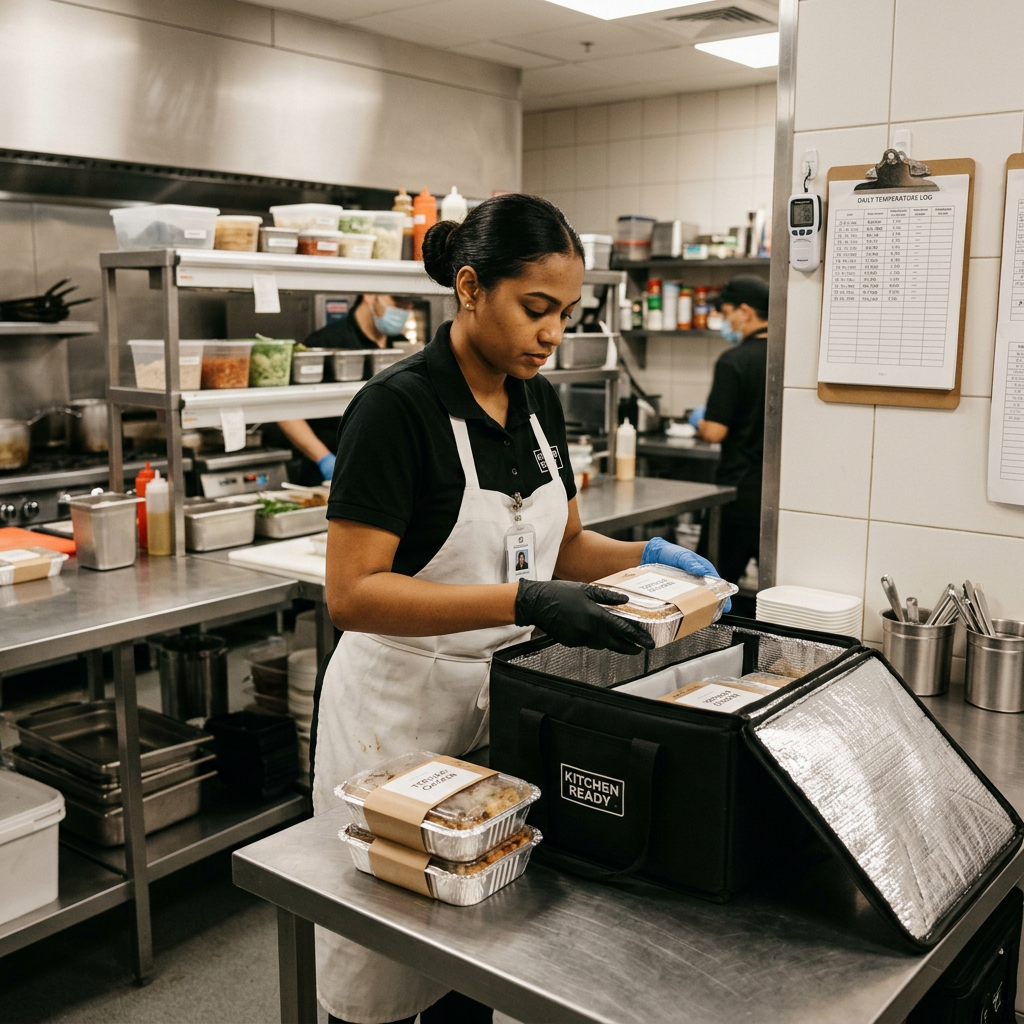
EU hygiene Regulation (EC) No 852/2004 requires food businesses to implement controls based on HACCP principles. When starting a delivery service, you combine kitchen hygiene with transport logistics, and both must be reflected in your HACCP plan and food hygiene procedures.
This includes temperature control, personal hygiene, cleaning schedules, incoming goods checks and traceability. For delivery, also set maximum transport times, separate hot and cold food and keep transport boxes clean.
- Process chain from incoming goods to handover documented
- Critical control points with temperatures and times defined
- Cleaning schedule implemented and documented
- Instruction and training records filed
Section 43 IfSG instruction, hygiene training and documentation
For activities covered by section 42 IfSG, instruction under section 43 IfSG is required before first starting work. The certificate must be no more than three months old when the activity is first started. It is still colloquially called a health certificate, but does not include a medical examination. The employer instructs affected staff after they start work and every two years thereafter; attendance and evidence must be documented or retained. The legal basis is section 43 of the Infection Protection Act.
This is separate from role-specific food hygiene instruction and training. Keep clear records of temperature checks, cleaning, deviations and corrective action too.
A platform profile is not enough: direct ordering, software and local visibility
Many founders start with major delivery platforms. That can generate early orders quickly, but creates dependence because customer data and communication stay with the platform. A stable launch therefore also needs your own ordering channel and local visibility:
- Ordering on your own website, easy to use on smartphones too
- Flyers, menus and delivery inserts, each with a QR code to the ordering shop
- Social media and contact with regular guests
- A well-maintained Google Business Profile
- Delivery platforms as a supplementary channel at most
Become less dependent on Lieferando and other platforms
Most enquiries GastroSprint receives come from established restaurants wanting greater independence from Lieferando. They have to move guests from the platform to their own channel afterwards. New businesses avoid this detour if their direct channel is part of the plan from the outset.
Operations and implementation: delivery vehicles, insurance, logistics and software
In daily operations, vehicles, insurance, routes and ordering must work together so the process holds up even on a busy Friday evening.
Delivery vehicles and equipment: cooling, packaging, storage and processes
The distance determines the vehicle. An e-bike is often quickest in city centres, a car suits longer routes, and a scooter falls in between. You also need insulated boxes with separate hot and cold compartments, storage for packaging, clear labels on every order and defined handover procedures.
Insurance for delivery businesses: public liability, vehicles and compulsory cover
Motor liability insurance is compulsory for cars and motor scooters. Tell the insurer about delivery use, because cover depends on the agreed purpose. Pedelecs with no more than 250 watts of continuous rated power and pedal assistance only up to 25 km/h count as bicycles under the conditions of section 1(3) StVG and do not require compulsory motor liability insurance. Speed pedelecs must be distinguished from these.
You must notify the responsible statutory accident insurance institution within one week of starting the business. Under section 192 SGB VII, this obligation is also fulfilled by registering the trade within the same period. BGN is normally responsible for hospitality businesses; clarify that your business has been recorded. Employees are generally covered by statutory accident insurance on delivery trips undertaken as part of their insured work.
Public liability insurance is not compulsory, but is strongly recommended because it covers typical harm to guests or damage caused by your products. Whether other policies, such as contents or legal expenses insurance, make sense depends on your size and risks.
Connect logistics, route planning and online ordering
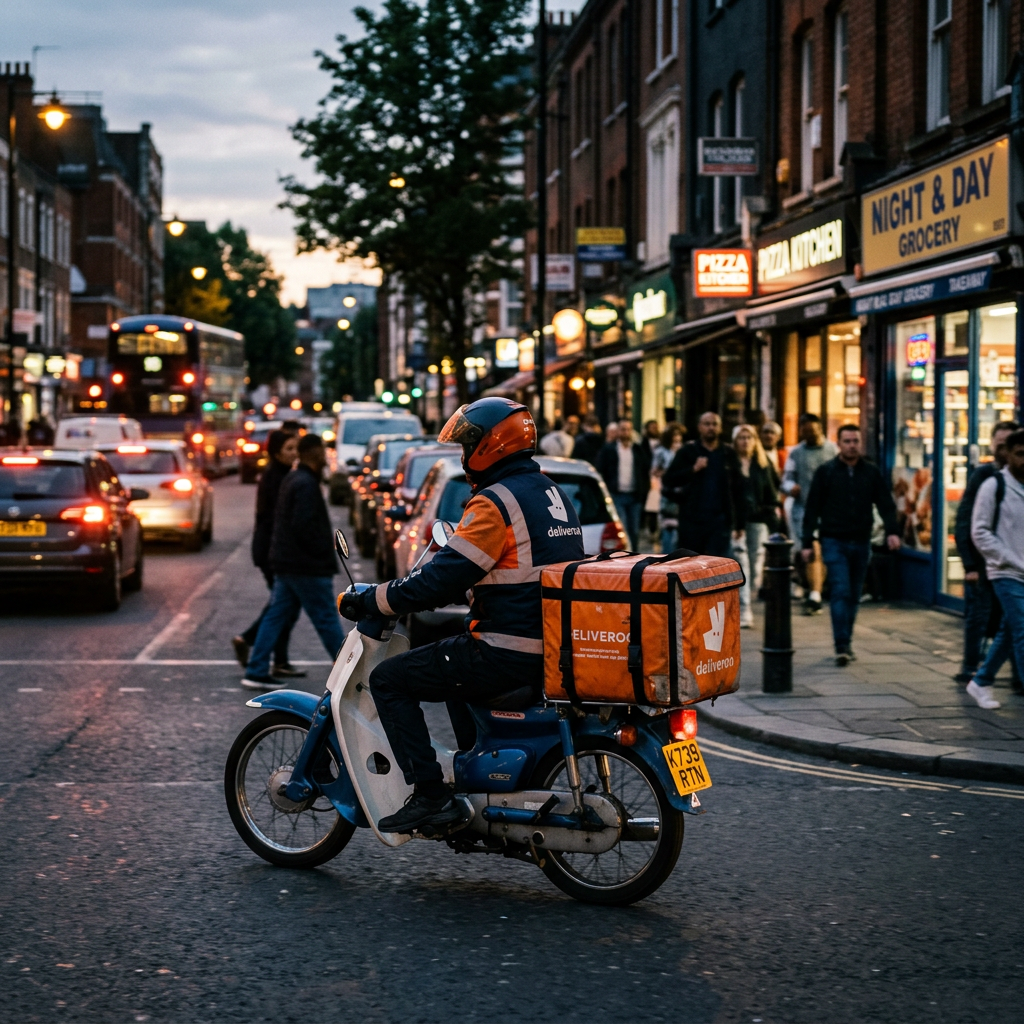
Once you have a second driver, you need a routing process rather than guesswork. Coordinated logistics and route planning with dispatch software for driver assignment and route optimisation help group orders, reduce waiting and complete more stops per hour. This is one of the strongest ways to improve margins. Such software is a separate program alongside the ordering shop that receives orders.
For ordering, guests need a clear, quick process and your team needs internal handling without breaks between systems. Use these two guides as a practical foundation:
- Set up online orders properly (checklist): Online ordering checklist
- Costs and context for online ordering systems: Online ordering system costs
Plan commission-free direct orders
If you want to start your own delivery service or become more independent of delivery platforms, GastroSprint can be a predictable fixed cost: the GastroSprint Direkt plan starts at €64 net per month, with a one-month term and 0% GastroSprint order commission. Online payments require a Mollie account, whose fees are not included in the monthly price. In the dashboard, set delivery zones by radius or draw them freely, and exclude individual postcodes. Upload your existing menu as JPG, PNG or PDF; the AI menu import reads the dishes, which go online only after your approval.
While GastroSprint provides the ordering channel, delivery and attracting new guests remain your responsibility, for example through your Google Business Profile and flyers with QR codes.
FAQ
Which permits and registrations do I need to start a food delivery service?
You will generally need to register a business or check whether your existing registration needs amending. You must also register as a food business with the relevant food safety authority. Discuss changes to an existing restaurant’s registration with that authority; other permits depend on your location and operation.
Whether a hospitality licence or a special notification is required depends on state law and your business model. Serving alcohol on site is an important point to check; ask your local trade or public order office.
How do I create an HACCP plan, and who checks food hygiene?
Describe the process from incoming goods to delivery, identify hazards and define control points for temperature, time, cleaning and personal hygiene, with documentation. The local official food inspection authority checks implementation, generally without advance notice.
Your local food safety authority is the right contact for operational food hygiene. Instruction under section 43 IfSG is provided by the public health department or a doctor authorised by it.
Which insurance is compulsory and which cover is recommended for delivery businesses?
Cars and motor scooters need motor liability insurance covering the agreed delivery activity. Different rules apply to ordinary pedelecs and speed pedelecs. Also clarify registration with the responsible statutory accident insurance institution; timely trade registration can fulfil the notification obligation. Public liability insurance is strongly recommended.
Is a delivery platform profile enough, or how do I build local visibility?
A delivery platform profile can generate initial orders, but costs commission and creates dependence. A stable delivery business also needs direct orders through a website with online ordering, QR codes, contact with regulars and a well-maintained Google Business Profile.
Which costs should I plan for software, vehicles, staff and packaging?
One-off expenses include transport boxes, kitchen equipment, possibly a vehicle and website and shop setup. Ongoing costs include insurance, software, staff and possibly leasing. Each order adds ingredients, packaging, driver time, payment fees and potentially platform commission.
These costs vary considerably by city, delivery area, vehicle type and staffing model. Plan conservatively and adjust calculations once you have actual figures.
Conclusion: start a delivery service with a plan and keep margins in view
Treat delivery as a business in its own right, with food that travels well, honest costing, permits clarified early, an HACCP system used in practice, manageable delivery zones and a digital ordering channel.
This gradually reduces your dependence on delivery platforms while keeping prices and guest relationships in your hands.
To get your own direct ordering channel started: Request a no-obligation GastroSprint demo (from €64 net per month, 0% order commission, radius-based delivery zones plus excluded postcodes, AI menu import).
Sources and product basis
- Registering a food businessRegistration with the local food safety authority.Retrieved on
- section 43 of the Infection Protection ActInitial instruction, employer instruction and documentation.Retrieved on
- GastroSprint prices and contract termsGastroSprint Direkt starts at €64 net per month with a one-month contract term.Retrieved on
- Uber Eats Germany: pricingSource supporting the information in this guide.Retrieved on
- Sections 60 and 61 VerpackDGSource supporting the information in this guide.Retrieved on
- Section 192 SGB VII: notification obligationSource supporting the information in this guide.Retrieved on
- BGN: guide for business foundersSource supporting the information in this guide.Retrieved on
- Section 1 StVG: pedelecsSource supporting the information in this guide.Retrieved on
- Section 1 Compulsory Insurance ActSource supporting the information in this guide.Retrieved on
- BMF: VAT on catering services from 2026Source supporting the information in this guide.Retrieved on
- Food Information Regulation: Articles 14 and 44Source supporting the information in this guide.Retrieved on
- Section 2 Hospitality ActSource supporting the information in this guide.Retrieved on