Free restaurant ordering systems: Plans and costs
If you are looking for a free ordering system for your restaurant or delivery service, you probably want to pay less to delivery platforms and let guests order directly from you. But with ordering software, “free” almost never means that nobody pays.
You usually pay indirectly through per-order fees, payment processing costs, paid add-ons or your guests’ data. Here you will learn which free models exist, where the actual costs arise and at what volume a revenue share becomes more expensive than a fixed monthly price.
Overview: Is a free online ordering system worthwhile?
A free online ordering system can be a useful starting point if you understand its terms. The key question is not simply whether there is a subscription fee, but how costs develop as more guests order online.
Commission and payment fees grow with every order, while a monthly fee stays the same. With only a few online orders per month, a free plan can therefore be a practical way to test the waters. If you want to bring regular guests from delivery platforms to your own channel, however, revenue sharing soon takes a noticeable part of your earnings. At worst, you swap one dependency for another.
Who a free plan suits
A free system may suit you if
- You have very few orders, for example fewer than 20 to 30 per month.
- You want to test whether your guests will order online.
- Basic functions with little automation are enough for now.
- You decide in advance at what volume you will switch.
It is less suitable if you seriously want to grow your direct channel through QR codes, social media, flyers and your website, or if your delivery business needs reliable processes at peak times. The same applies if you want to use guest data to encourage repeat orders or prefer fixed costs to fees that grow with volume.
How free providers fund their services: four models
Every “free” ordering system needs a business model. Providers usually finance their free plans in one of these four ways.
Commission per order or a commission-free ordering system?
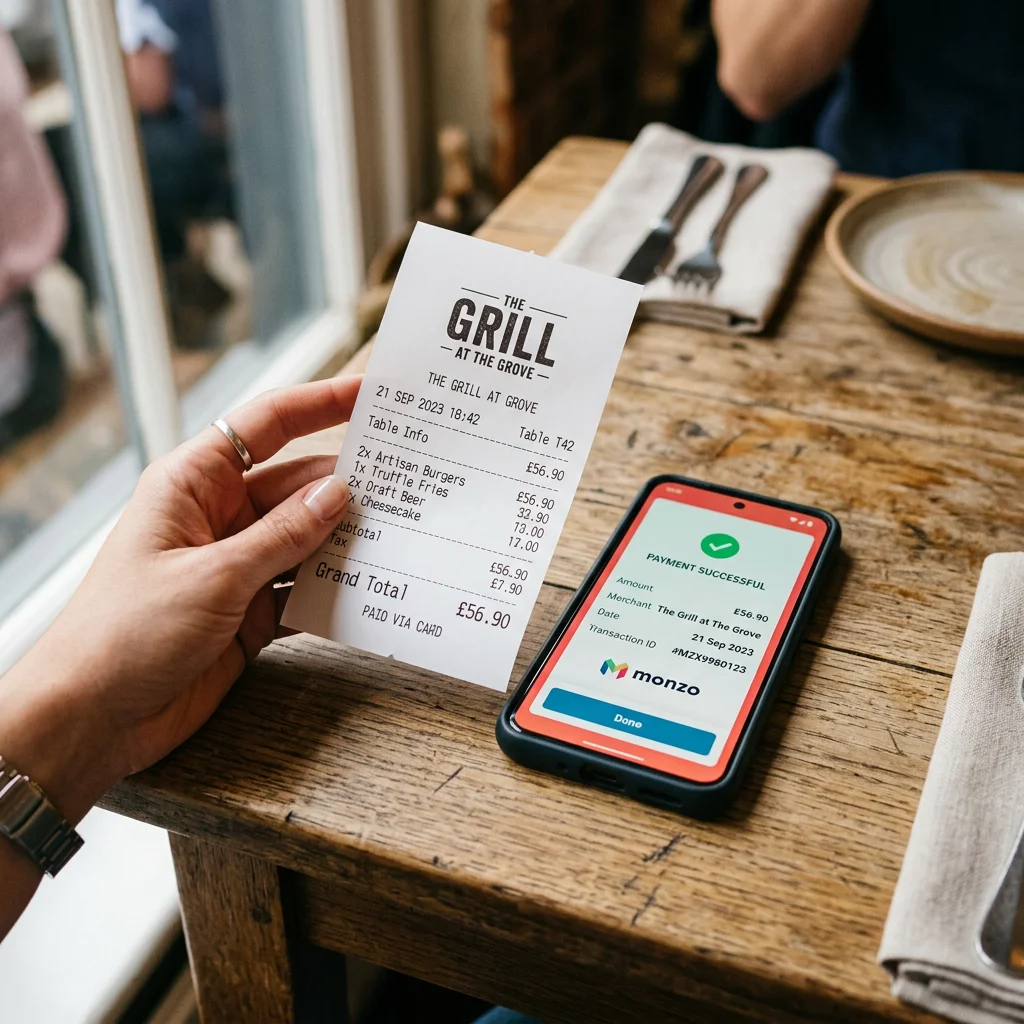
Most commonly, you pay a fixed percentage of each order. This is convenient at first because there are no fixed costs. The disadvantage only appears as you succeed: the better your own ordering channel performs, the more you pay.
A commission-free ordering system, by contrast, usually charges a predictable monthly fee. The provider does not take a share of every order; only payment provider fees are added separately. If you want to reduce what you pay to delivery platforms, check carefully that the new system is not another commission model under a different name.
Payment provider fees: costs that apply in every model
Card, PayPal and online bank transfer fees apply in addition, regardless of whether your ordering system has a fee. According to the Mollie pricing page (accessed on 5 October 2026), a payment in Germany using an EEA consumer card costs 1.80% + €0.25, while PayPal costs an additional €0.10 on top of PayPal’s fees. For a €25 order, the card payment therefore costs €0.70. Your own contract determines the terms that apply to you.
Always calculate these fees separately, and check whether a free provider ties you to a particular payment service or adds its own markups as a “service fee”.
Feature limits and paid upgrades
With freemium, you start for free but need upgrades for professional operation, for example for:
- Your own domain and an appearance without third-party branding
- A larger menu or multiple locations
- Better reporting and exports of customer and order data
- POS integration, kitchen printers or a kitchen display
- Customer support with guaranteed response times
Compare the package you will realistically need in six to twelve months, rather than just the free tier.
Advertising and data use during ordering
Some free systems and restaurant apps are financed through advertising and data use. This weakens your direct channel: you want to bring guests to your own business, not to another environment that suggests other restaurants to them. Typical examples include:
- Advertising space during ordering
- Partner offers such as “similar restaurants”
- Analysis of order times, baskets, locations and repeat-order rates
You also need to examine this data use carefully from a data protection perspective.
Break-even calculation: When free with commission costs more than a fixed monthly fee
The fixed price in this calculation comes from GastroSprint Direkt, starting at €64 net per month. The contract term is one month, and this plan has no setup fee. GastroSprint charges no ordering commission (0%); external payment provider fees apply separately.
Assumptions and formula: order value, order volume and commission rate
You need three figures: your average order value, your number of orders per month and the free provider’s commission rate. In simplified form:
- Revenue: Orders per month × average order value
- Cost of the free system: Revenue × commission rate, plus any payment markups
- Break-even: Monthly fee of the fixed-price model ÷ commission cost per order
We deliberately leave out payment fees. They apply to both models if you use the same payment service, so they do not change the break-even point. A payment markup charged by the free provider lowers the threshold. We assume a 7% commission rate in these examples; use the rate in your own offer for your calculation.
Example calculation: €25 average order
Assume the average order is €25 and the provider charges 7%:
- Commission cost per order: €25 × 7% = €1.75
- Break-even against a €64 monthly fee: €64 ÷ €1.75 ≈ 37 orders per month
From around 37 orders, you therefore pay more for the free system than the fixed-price plan. At 60 orders, you would already pay €105 to the provider, €41 more than the monthly fee.
Example calculation: €40 average order
With an average order value of €40 and the same 7% commission, the calculation is:
- Commission cost per order: €40 × 7% = €2.80
- Break-even: €64 ÷ €2.80 ≈ 23 orders per month
Here, you reach the threshold at just over five orders per week.
Result: The fixed price is cheaper from around 23 to 37 orders per month
The table summarises both examples, counting only the revenue share.
| Average order value | Commission rate | Cost per order | Break-even at €64/month |
|---|---|---|---|
| 25 € | 7 % | 1,75 € | Approx. 37 orders |
| 40 € | 7 % | 2,80 € | Approx. 23 orders |
The higher your average order value, for example through family orders or menus for several people, the sooner percentage fees become expensive.
Setup, additional services and your own time are covered in our guide to online ordering system costs in more detail.
Alternatives and checks before you start
Free ordering systems can sometimes be enough for a small start. But restaurants differ: a pizzeria with many evening deliveries has different requirements from a café with occasional collection orders. Assess the alternatives and their terms against your own processes.
Open-source ordering systems: free licence, paid operation
An open-source ordering system may have no licence fee. Running it still costs money for hosting, setup and customisation, security updates, backups and support from your own team or an agency.
Without your own IT resources, open source can quickly become more expensive than a modest subscription. It is an option for technically skilled teams that realistically budget for maintenance and security.
GDPR: contracts, storage location and data export
Even with a free system, you as the operator are generally the controller under the GDPR. Check at least the following:
- Is there a data processing agreement?
- Is data stored in the EU or EEA, or in a third country?
- Does the system support guest requests for access and erasure, taking statutory retention obligations into account?
- Which export formats and contract terms apply when you switch providers?
- Does the provider use data for advertising or partners, and is this clearly documented?
A location outside the EEA is not automatically unlawful. The specific transfer must meet GDPR requirements, such as an applicable adequacy decision or appropriate safeguards with supplementary measures where needed. The European Commission explains the rules on international data transfers.
A contractual data export for switching providers is separate from individual guests’ statutory rights of access, erasure and, where applicable, data portability. The European Commission’s overview of individual rights explains these rights. Have the export options for your business confirmed separately.
APIs and integrations: which connections save manual work
How much daily work an ordering system saves depends largely on its integrations. Without them, “free” can quickly become “free, but manual”: retyping orders ties up staff at peak times and extends waiting times. Clarify the following beforehand:
- POS systems: Is every online order automatically passed to your POS system?
- Accounting: Can you obtain clean exports?
- Delivery and collection: Are order statuses, time slots and a driver overview available?
- Website: Can the ordering website be integrated without a makeshift solution?
Ask about your specific POS system rather than an API in general. GastroSprint already has a ready-made integration with WinOrder, with more systems planned.
Conclusion: A free ordering system can work for testing, but rarely for growth
Free plans are a legitimate starting point, but in economic terms they are almost never free. Your order volumes and plans for your online channel determine the right choice.
Recommendation for owners: four checks
Make a clear-headed decision with these steps:
- Calculate the break-even point: Use your actual average order value and order volumes.
- Clarify your growth target: If you want to grow your direct channel, a commission-free ordering system is usually the better option.
- Check control over your data: Exports, data protection and an ordering process without third-party advertising.
- Plan integrations: Consider POS, online payments and ordering processes from the outset.
GastroSprint: no free plan, but a fixed monthly price
GastroSprint does not offer a free ordering system, and an article about free plans should make that clear. Instead, you pay a fixed monthly price. Direkt starts at €64 net, exactly the figure used in the break-even calculation above. We take no percentage of your orders; online payment fees are handled through your own Mollie account. Find all plans on our Pricing page.
Your own figures show which model costs less for you. Compare them in a free, no-obligation demo against the fixed price; we do not ask for payment details.
If you currently use GloriaFood, which describes itself on its website as a free online ordering system for restaurants, you will need to switch anyway. According to the provider, the service will close on 30 April 2027. Our comparison of the two systems explains the differences in detail.
FAQ
How does a free online ordering system make money?
Usually through commission per order, payment processing fees, paid upgrades in a freemium model, or advertising and data use. “Free” often describes only the entry tier.
At what order volume does a free commission-based system cost more than a monthly plan?
In our examples with 7% commission, from around 23 orders per month at a €40 average order value, or around 37 at €25. If the provider also adds payment markups, the threshold is lower still.
What additional transaction fees apply to payment processing?
That depends on the payment method and provider. Card payments commonly involve a percentage plus a fixed amount per transaction. Mollie lists 1.80% + €0.25 for EEA consumer cards, for example, as of 5 October 2026. Your own contract determines the applicable terms.
Is an open-source ordering system worthwhile for small restaurants?
Only if you can reliably cover setup, hosting, updates and security, either yourself or with a service provider. Otherwise, the free licence can ultimately cost more than a managed subscription.
What GDPR risks come with free ordering systems?
Risks include unclear data use, missing required data processing agreements, and unlawful advertising or tracking. A server location outside the EEA is not automatically unlawful; what matters is whether the specific data transfer meets the requirements. Check contracts, data flows and support for individual rights. Clarify exports for switching providers separately.
Is there a free ordering app for restaurants?
Usually only the browser-based ordering website is free: a web app guests access without installing anything. An own restaurant app in the App Store and Google Play normally costs extra because store publication and ongoing maintenance require work. GastroSprint includes it with Growth at €119 net per month or Complete; we handle submission and questions from Apple and Google. With Direkt, your guests order in the browser.
Sources and product basis
- Mollie pricingStandard terms for online payments in Germany.Retrieved on
- GastroSprint pricesPlans, contract terms and fees for your own ordering channel.Retrieved on
- European Commission: international data transfersRequirements for data transfers outside the EEA.Retrieved on
- European Commission: individual rightsAccess, erasure and portability of personal data.Retrieved on