Ordering system for the catering industry: types, functions and selection criteria at a glance
An ordering system for the catering industry today decides whether you manage orders properly, protect your margin and maintain control over guest and order data - or whether portals, paperwork and double work determine your everyday life.
A setup that strengthens direct channels, makes processes stable and integrates cleanly into the checkout, payment and kitchen is particularly worthwhile for owner-managed restaurants and delivery services.
A Ordering system for the catering industry has long been more than just “something with online ordering”. It decides whether you want yours Orders, customer relationships and margins yourself - or whether portals, paperwork and double work set the tone. Especially as the owner of a restaurant or delivery service, you need a system that fits your business instead of forcing yourself into rigid processes.
Ordering system for the catering industry: types and selection criteria
At its core, there are five types of Ordering systems in the catering industry, which can be combined: own online online ordering website for delivery and collection, own ordering app, Waiter app at the table, QR code ordering system directly at the guest place and Self-service kiosk (or Order terminal for the catering industry) in the restaurant. Everyone pursues the same goal: record orders accurately, hand them over reliably to the kitchen or bar, collect them and relieve the burden on processes for you and your team.
The most important selection criteria: Does it fit? Ordering system for the catering industry about your type of business (pure restaurant, take-away concept, delivery service or mixed form)? Does it support all the ordering methods you need today and tomorrow - in the restaurant, for pickup and for Delivery service? How cleanly do they work? Interfaces (API integration) about your cash register system, your payment providers and, if necessary, accounting or inventory management?
It is also crucial: does guest and order data remain in your hands or does it end up with a platform operator who later “sells back” your own customers to you? A modern one Restaurant ordering system should one Kitchen Display System (KDS) integrate, offer digital payment methods and provide you with clear evaluations: which dishes are running when, average receipts, cancellations, delivery areas, peak times. This way you can see specifically where you can reduce waiting times, plan staff better and increase contribution margins.
What an ordering system does in the catering industry: Ordering from A to Z
A professional one Ordering system for the catering industry menus the entire journey of an order - from the guest's first contact with your menu to payment and delivery of the food. It is crucial that this path is digitally clearly documented and transparent for everyone involved: guests, service, kitchen, cash register and management.
It always starts with the menu. She has to be in yours Restaurant ordering system Maintained centrally: prices, availability, options (extras, level of spiciness, side dishes), daily specials, delivery areas, minimum order values. Ideally, you only maintain the card once and automatically distribute it to all channels: online online ordering website, order app, QR codes at the table, kiosk terminals and internal waiter app.
Ordering takes place differently depending on the channel, but follows the same steps: The guest selects a dish and the appropriate options, enters instructions for the kitchen and places the order. This Ordering system ensures that this information arrives structured and error-free - not as an illegible note or loose message.
Ordering processes and order taking: table, take-away and delivery service
The biggest weak point in many companies is taking orders. This is exactly where it decides whether yours Ordering system for the catering industry keeps your back free or creates additional construction sites for you.
- At the table: A waiter app replaces the handwritten one Order forms in the catering industry. Special requests are structured, nothing is lost, the kitchen receives clear information.
- Takeaway: Time windows and collection processes must be plannable. An online ordering system helps manage peak times rather than exacerbating them.
- Delivery: Delivery areas, fees, minimum order value, driver status. A good system makes delivery business scalable, without paper chaos.
Sales, efficiency and less waiting times through self-ordering
Self-ordering is one of the biggest levers to Sales per guest and at the same time relieve your staff. QR code ordering at the table, ordering terminals or your own online ordering website mean that orders are placed more quickly, additional sales happen more easily and waiting times are reduced.
The classic: guests order another drink or dessert without having to wait for service. This one Order moments are sales moments – and self-ordering helps you not to lose them.
Direct channels in the ordering system for the catering industry: online ordering website and order platform
If you Commissions If you want to reduce costs on delivery platforms, there is no way around having your own direct channels. A modern one Ordering system for the catering industry offers you the basis for this: own online online ordering website and optionally one Ordering platform for the catering industry in your brand.
The biggest difference to external platforms: control. With direct channels, you determine the menu, prices, promotions, delivery areas and communication channels. Guest and order data belongs to you.
Own online online ordering website (example: GastroSprint: 0% commission, from €64 net/month)
Your own online online ordering website is the basis of every direct strategy. At GastroSprint you can set up such a shop and operate your digital ordering channel in your brand. The Online ordering website starts from €64 net/month – and the crucial thing: 0% GastroSprint order commission.
You can find relevant details here: Online ordering system for restaurants.
Typical features to look out for:
- Menu maintenance with variants/extras
- Collection and delivery with time slots
- Online payment and status management
- Handover to kitchen/KDS instead of “tablet chaos”
Ordering system for the catering industry as an app: own iPhone and Android app (GastroSprint Growth from €119 net/month)
Your own app is particularly worthwhile if you want to retain regular customers and simplify reorders. GastroSprint has its own iPhone and Android app from the Growth plan for €119 net/month available.
The benefits in everyday life:
- Faster reorders (favorites/“last orders”)
- Direct channel without portal dependency
- Uniform database in the ordering system
On-site restaurant ordering system: waiter app, QR code ordering system and kiosk
How your business “runs” is decided on site: speed, error rate, guest feeling. A strong one Restaurant ordering system supports exactly where it matters in everyday life: service, kitchen, cash register.
Waiter app at the table: quick ordering, fewer errors, better processes
The waiter app replaces that Order forms in the catering industry as a standard process.
- Direct forwarding of the order to the kitchen/bar
- Structured special requests instead of “paper guessing”
- Faster processes, fewer misunderstandings
- Optional: card payment at the table, splitting the invoice, reasons for cancellation
QR code ordering: Control ordering moments at the table, order contactlessly
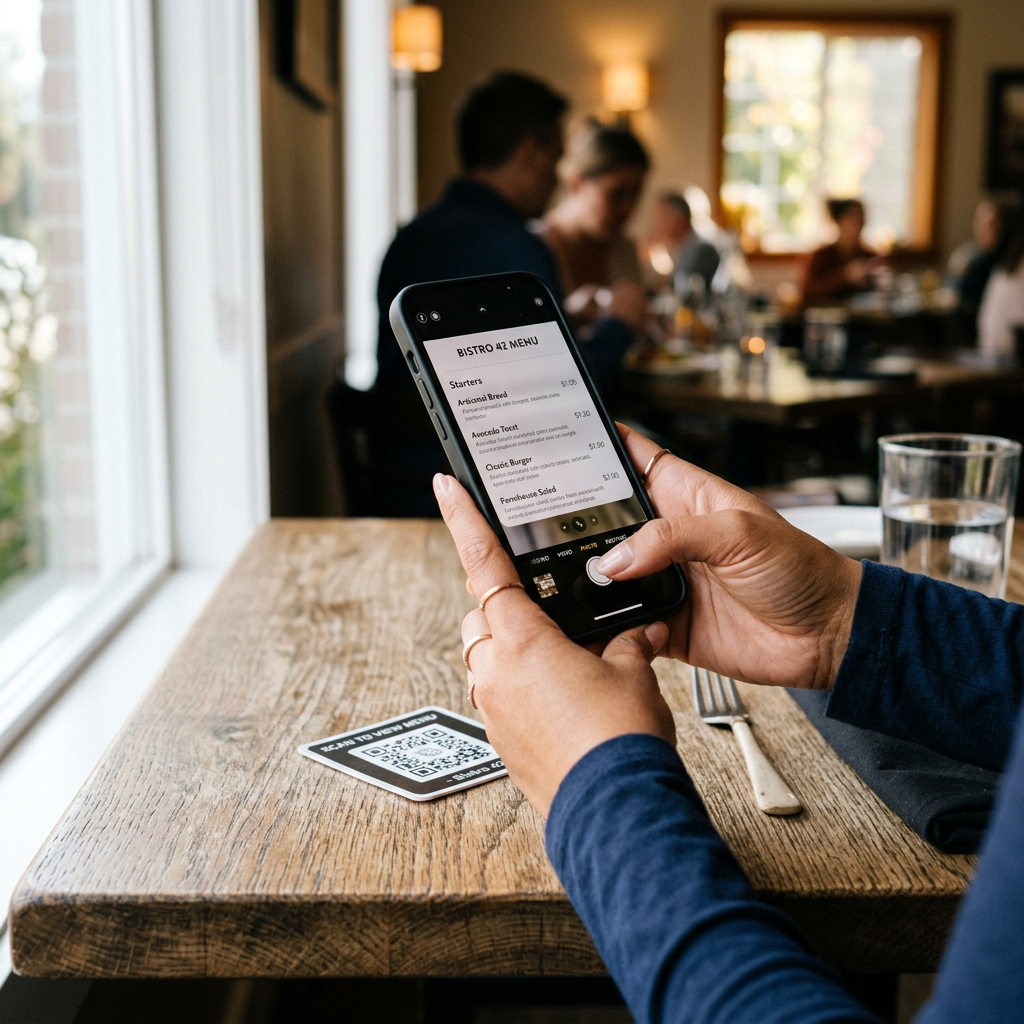
A QR code ordering system is a pragmatic introduction to self-ordering. Guests scan, see the menu, place orders - optionally with payment. This reduces waiting times and prevents additional orders from being left behind.
Important: QR code orders should run smoothly in the same ordering system, otherwise you will have isolated solutions again.
Self-service kiosk and ordering terminal for the catering industry: cushion peak times, scale self-ordering
A Self-service kiosk or Order terminal for the catering industry is particularly useful at high frequency (lunchtime, events, counter business).
- More throughput without additional cashier staff
- Standardized order taking, fewer errors
- Upsell opportunities directly in the ordering process
- Clear handover to the kitchen via KDS
Functions of an ordering system for the catering industry: KDS, interfaces, payment processing, data protection and GDPR, inventory management
The type of system is only half the battle. The functions and integrations are decisive for the purchase. You can also find a good overview on our website Features.
Kitchen Display System (KDS): why it is crucial
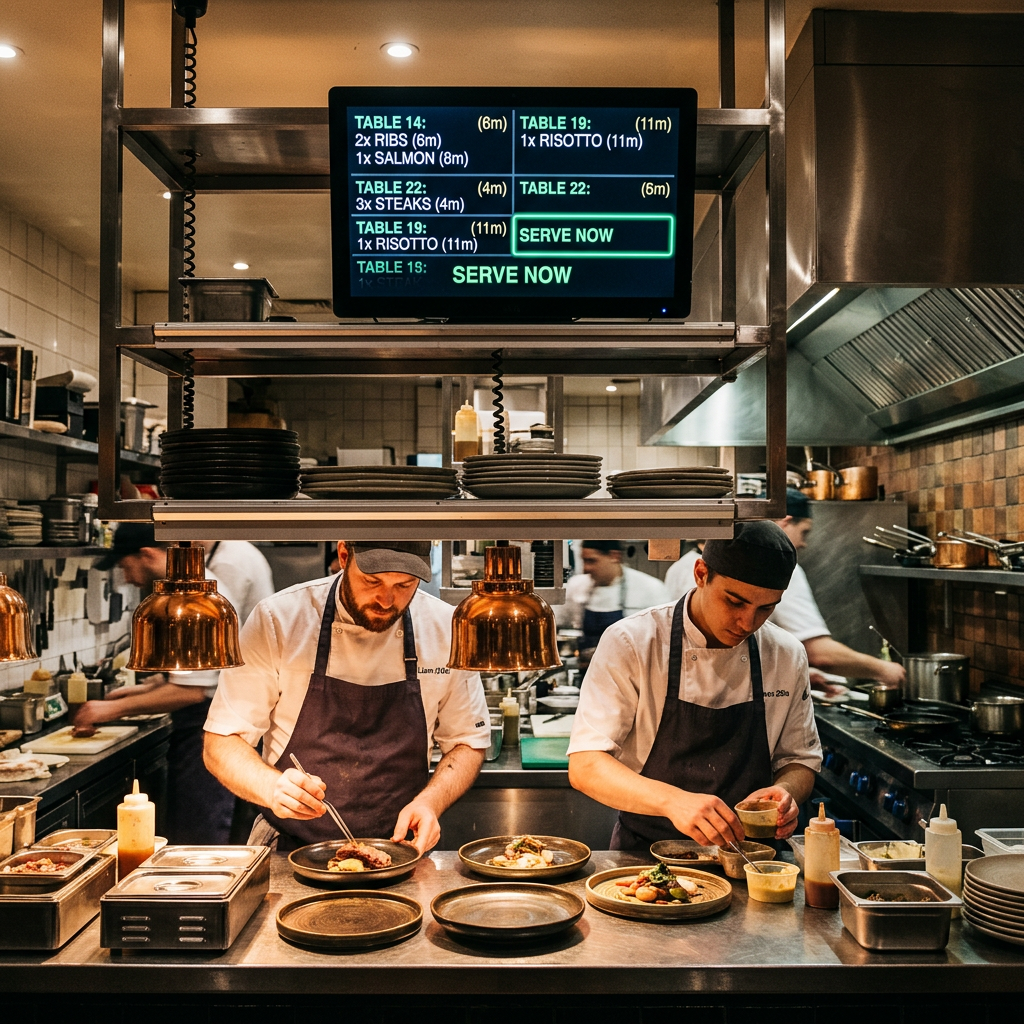
A Kitchen Display System (KDS) replaces receipts and chaos with clarity:
- Orders in real time, neatly sorted
- Status (in progress/finished) visible for service and output
- Fewer lost pieces of paper, fewer queries
- Better timing during peak times
Interfaces (API integration): checkout, payment, delivery platforms
Interfaces (API integration) avoid double entries. Typical connections:
- Cash register system (bonus, tax rates, daily closing)
- Payment provider (transaction status, fees)
- Delivery platforms (if you work in parallel)
- Accounting/Export
Payment processing (contactless payments): fees, UX, resiliency
Guests are expecting today contactless payment. Pay attention to fees, user experience and reliability so that checkout in the restaurant, in the online ordering website and in the app works reliably.
- Cards + Apple Pay/Google Pay
- Online payment in the online ordering website/app
- Automatic posting (no typos)
- Transparent fee structure and stable terminals
Data protection and GDPR: what you really need to check
Data protection & GDPR are mandatory as soon as you process customer data. What is crucial is that processes work in everyday life – and not just exist “on paper”.
- AV contract (order processing)
- Roles/rights in the system (who sees what?)
- Deletion and information processes
- Traceable data storage
Inventory management (warehouse integration) and menu synchronization
One Inventory management (warehouse integration) brings you operational advantages: fewer discussions with guests, fewer mis-sales and better planning based on real sales data.
- Stock/bottlenecks visible
- Automatically hide unavailable items
- Better purchasing planning via sales data
- Fewer “sold out” discussions among guests
Selection grid for ordering systems in the catering industry: restaurant, take-away and delivery services
A simple matrix will help you avoid buying the wrong system:
| Operating type | Recommended setup | Main goal |
|---|---|---|
| Restaurant with table service | Waiter app + KDS, optional QR code ordering | Reduce errors, speed up service |
| Takeaway/Pickup | Online online ordering website + online payment, optional kiosk | Make peak times predictable |
| Delivery service / ghost kitchen | Online online ordering website + app, KDS, strong API integration | Direct sales up, commission down |
If you are currently weighing up “online ordering website or delivery platform”, also read: Online ordering website or delivery platform?
Checklist: Minimum requirements before switching
- Menu can be maintained centrally (maintain once, use everywhere)
- Order options: table, pickup, delivery
- KDS or at least KDS capable
- API integration for checkout (no double entry)
- Payment processing: contactless + online, neatly recorded
- GDPR: AV contract, rights concept, clear processes
- Support/onboarding: accessible, practical
FAQ
How much does an ordering system for restaurants cost without commission?
That depends on the scope of functions. A commission-free model usually works with fixed costs instead of revenue sharing. Example: You can have your own online ordering website 64 € net/month start (at GastroSprint with 0% order commission). What matters is how much commission you currently pay to portals and how much direct sales you can realistically build.
Which is better: online ordering website or delivery platform (commission vs. direct sales)?
Delivery portals provide reach, but cost commission and take customer data out of your hands. An online ordering website is your direct channel: more control, more margin, better customer loyalty. In practice, a mix often makes sense: portal as acquisition, online ordering website/app as a destination for reorders.
How do I integrate an ordering system with a cash register system and interfaces (API integration)?
Make sure the system is genuine Interfaces (API integration) and not just “export files”. Ideally, orders go through the checkout automatically, payments are recorded correctly and you have a consistent daily closing without manual rework.
Does an order slip still make sense in the catering industry today – or is it completely digital?
As a backup: yes. As a standard process: rare. A Order forms in the catering industry causes errors, costs time and makes evaluations difficult. With the waiter app, QR code ordering and KDS, you get faster processes and more control - without having to interpret notes.
Conclusion and next steps
A Ordering system for the catering industry makes economic sense if it makes your ordering processes stable, reduces commissions and gives you back control over your data. Start with a clean base (menu, order taking, payment, KDS, interfaces) and then expand with an app, QR or kiosk – to suit your business.
Sources and product basis
- GastroSprint prices and plansOfficial plan overview for the online ordering website and your own restaurant app.Retrieved on